One Halloween shoot can produce several useful pieces if you capture different kinds of evidence. Six nearly identical edits with different opening text are not a complete repurposing strategy. Give each output a different reader question and make sure the footage can actually answer it.
Consider a fictional creator filming a handmade haunted bookshelf. The set uses paper silhouettes, a battery-powered practical light, and a movable prop. The main video shows the transformation. Supporting pieces explain materials, lighting, the reveal cut, the sound treatment, a troubleshooting fix, and the finished setup.
Decide the outputs before packing the camera
Write the six promises first. For each one, identify the indispensable shot. If the lighting article needs to show where the lamp sits, filming only a beautiful close-up of the final shelf will not support it.
| Output | Viewer question | Capture required |
|---|---|---|
| Setup walkthrough | How does this arrangement work? | Wide view before and after, plus a layout sketch |
| Materials guide | What can I substitute? | Labelled items and close-ups of attachment points |
| Lighting lesson | Why is the silhouette readable? | Light position and comparison frames |
| Reveal tutorial | Where does the cut happen? | Matched start and end takes with overlap |
| Sound example | What changes when the mood changes? | Clean voice, room tone, prop sounds, and alternate mixes |
| Troubleshooting post | How do I fix a weak shadow? | A failed setup followed by the actual correction |
The matrix protects originality. Each derivative uses the same production effort but offers a different explanation. If one output has no distinct question, remove it rather than manufacturing another article from the same paragraph.
Capture the invisible parts of the workflow
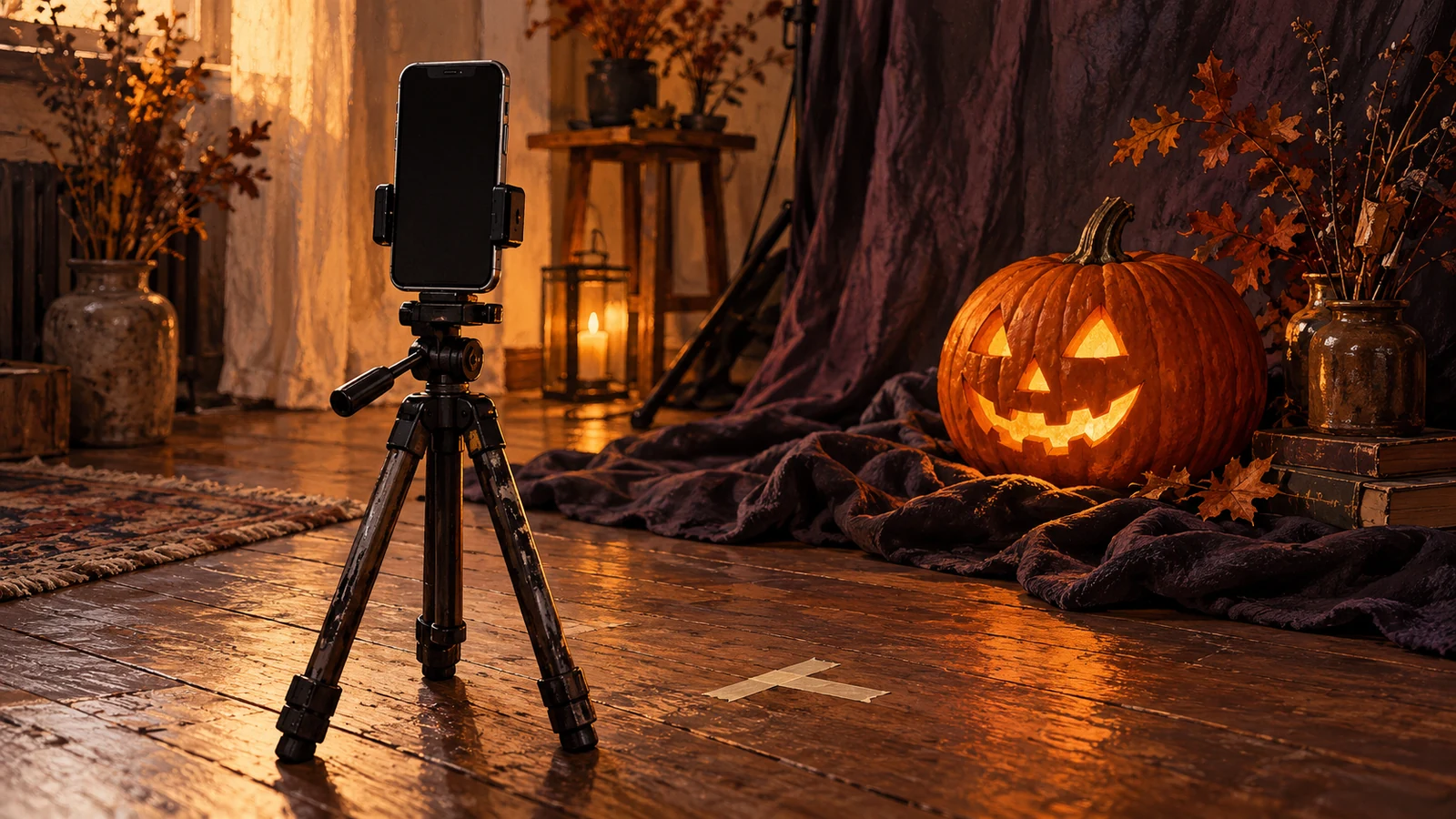
Photograph the tripod position, exposure settings, light direction, and prop spacing. Record a short spoken note after each setup describing what changed. These references help explain the process and allow pickups without reconstructing everything from memory.
Capture clean footage before adding titles or music. Hold still at the beginning and end of actions so you have room for different edits. Film both the complete action and a detail, but do not cut away the step that makes the method understandable.
Include the unsuccessful comparison deliberately. A soft shadow caused by a different lamp position is useful teaching evidence. Label the difference accurately; avoid implying that the result came from an editing trick if you changed the physical setup.
Record sound as reusable material
Collect room tone, paper movement, shelf taps, and the light switch separately. These recordings can support a process video without forcing every derivative to share the same music. Name each file for its source and take so the editor can identify it later.
For the mood demonstration, audition the seasonal STIS album linked below alongside your original sounds or another suitable licensed option. STIS is operated by Angry Media, the publisher of this site. Confirm the applicable terms for each destination, including any client or paid use, before export.
STIS spooky season halloween sounds
Make the music comparison educational: explain whether a cue adds unease, playfulness, or rhythmic emphasis. Do not describe the music as a guarantee of engagement. Keep a clean voice version so the lesson remains usable if the selected cue cannot be cleared for one distribution channel.
Adapt the information, not only the crop
A short clip can demonstrate the reveal. A longer article can show the lamp position and explain why the edge becomes sharper or softer. A carousel can list assembly steps. The same footage supports them, but their information density differs.
Rewrite the opening for each promise. “Here is my spooky shelf” suits a showcase; “Move the lamp here to sharpen the bat shadow” suits a tutorial. Do not hide the useful instruction behind an identical atmospheric introduction in every version.
Plan captions and important visual descriptions with the derivatives. W3C WAI's media guidance supports addressing these needs early. A silent comparison still needs clear labels identifying the setup change.
Keep a rights map for the derivatives
Record the people, props, artwork, fonts, music, and locations that appear. An asset usable in one version may not be suitable for another commercial context. TikTok's Commercial Music Library documentation describes its business music framework; verify the specific track and placement instead of treating the library name as a universal permission.
Store the original footage, project files, approved exports, source references, and license evidence together. Add a delivery note listing which outputs use which audio. If a cue must change, you should be able to find every affected export without reviewing the whole archive.
Before release, compare the six promises with the final files. Remove any derivative that repeats the main piece without adding useful detail. Save the capture matrix with your notes after Halloween. It becomes a reusable production method for winter events, product launches, and ordinary tutorials.
Related guides
Sources
- W3C WAI — Making Audio and Video Media Accessible — checked 3 October 2026.
- TikTok for Business — About the Commercial Music Library — checked 3 October 2026.